
In the UK, we tend to solve about 90% of life’s minor crises by putting the kettle on. Lost your keys? Have a cuppa. Pipe burst? Tea. Rain ruined the barbecue? Pour a builder’s brew and stare solemnly out the window. Creating a dementia friendly home doesn’t mean turning a cosy house into a clinical ward
However, when a loved one is diagnosed with dementia or progressive memory loss, even the comforting routine of making a cup of tea can gradually become a bit of a kryptonite obstacle course.
September marks World Alzheimer’s Month (with World Alzheimer’s Day on 21st September), making it the perfect time to talk about how we can adapt our homes. The goal isn’t to turn a cosy family house in Milton Keynes into a sterile, clinical ward. Far from it! It’s about making clever, subtle tweaks that keep your mum, dad, or partner safe, independent, and comfortable in the place they love most—their own home.
Whether you’re exploring visiting domiciliary care or considering live-in care support, here is your practical, slightly lighthearted, room-by-room guide to creating a dementia-friendly home.
1. The Living Room: Banishing the Swirls and Managing the Shadows
Living rooms should be a sanctuary of comfort, soft cushions, and Sunday afternoon naps. But to a brain experiencing visual-perceptual changes due to dementia, a living room can sometimes look like a hall of mirrors.
Mind the Pattern (Literally)
That swirling 1980s floral carpet in the front room might hold nostalgic charm, but to someone with dementia, high-contrast patterns can look three-dimensional. A dark swirl can easily be mistaken for a hole in the floor or a sleeping pet, leading to hesitation, anxiety, or falls.
- The Fix: Opt for plain, neutral flooring where possible. If replacing the carpet isn’t on the cards right now, try to ensure the room is evenly lit to minimise harsh visual contrast.
The Great Doormat Illusion
Place a solid black welcome mat inside the front door, and someone with spatial perception challenges might see a gaping abyss. They’ll either try to jump over it—a recipe for a tumble—or refuse to walk past it altogether.
- The Fix: Choose doormats and rugs that closely match the colour of the surrounding floor so the transition feels smooth and flat.
Let There Be Light (And Ditch the Shadows)
British weather isn’t exactly famous for blinding sunshine, but natural light is a huge mood booster and helps regulate sleep cycles. As dementia progresses, dark corners and harsh shadows can cause confusion or even hallucinations.
- The Fix: Draw back heavy curtains completely during the day. In the evening, use bright, warm LED bulbs that illuminate corners evenly without creating stark shadows or glare on shiny surfaces.
2. The Kitchen: Preserving the Sacred Tea-Making Ritual
The kitchen is the heart of the British home. Keeping it accessible is one of the best ways to foster independence for as long as possible.
The Power of High Contrast
Did you know that contrast helps stimulate the brain and encourages appetite? White food on a white plate on a white tablecloth can lead to confusion because the brain struggles to separate the items.
- The Fix: Swap plain white mugs and plates for brightly colored ones. A bright red or blue mug on a clear countertop makes finding that morning cup of tea infinitely easier.
Glass Doors and Clear Views
Rummaging through six cupboards to find the baked beans is frustrating for anyone, but for someone with memory loss, it can cause genuine distress.
- The Fix: Replace solid cabinet doors with glass-fronted ones, or remove the doors altogether for the most frequently used items. Storing everyday essentials—like tea bags, mugs, and bowls—in clear view removes the guesswork.
Safety First, Tea Second
Independence matters, but safety comes first.
- The Fix: Invest in a dementia-friendly kettle that limits how much water it boils at once, or choose an eco-kettle with an automatic shut-off feature. If gas rings are a concern, consider installing safety isolation switches that family members or carers can turn off when they aren’t directly supervising cooking.
3. The Bathroom: Mirrors, Mats, and the Famous Blue Loo Seat
Bathrooms are functional spaces, but they are also full of hard, slippery surfaces and reflective glass—two things that can make bath time unnecessarily stressful.
The Mystery of the Mirror
For someone with advanced dementia, looking in a bathroom mirror at 3 AM can be frightening. They may no longer recognise their own reflection and believe a stranger is standing in the room staring at them.
- The Fix: If mirrors start causing distress or confusion, cover them with a light roller blind, a towel, or a removable window film when not in use.
The Great Blue Toilet Seat
Most standard UK bathrooms feature a white toilet seat against a white toilet bowl against a white tiled wall. For someone with impaired depth perception, targeting that seat becomes a high-stakes guessing game.
- The Fix: Replace the standard seat with a contrasting colour—bright blue or dark red seats are widely used in professional care settings for a reason. They make the toilet instantly recognisable from across the room.
Slip-Free and Barrier-Free
- The Fix: Replace loose bathmats with non-slip flooring or fixed rubber suction mats. Ensure grab rails are installed near the toilet and inside the shower—preferably in a colour that contrasts with the wall tiles so they are easy to spot and grab in a hurry.
4. Wayfinding & Routine: Helping the Brain Navigate
As short-term memory fades, the ability to navigate a familiar house can wobble. Simple visual cues act like a gentle GPS system throughout the day.
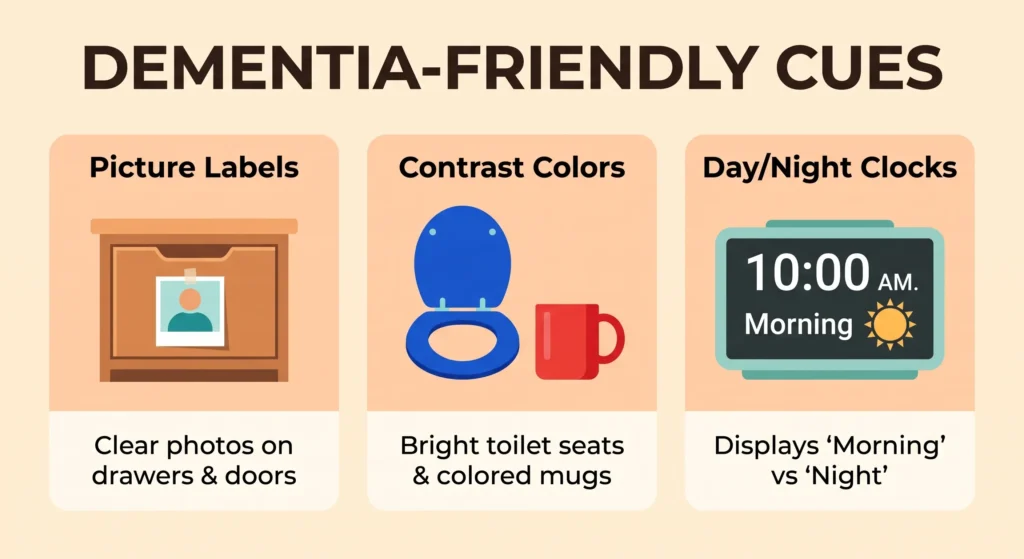
Signposts and Picture Labels
Text-only labels can sometimes become difficult to process. Combining clear, large text with a picture or icon works wonders.
- The Action: Stick simple picture labels on key doors (e.g., a picture of a toilet on the bathroom door, a bed on the bedroom door) and on the outside of wardrobe drawers (showing socks, shirts, or trousers).
Day & Night Clocks
When winter rolls around in Milton Keynes, and it’s pitch black at 4:30 PM, it’s remarkably easy to mistake tea time for early morning. This can lead to people getting dressed and heading out the door in the middle of the night.
- The Action: Install a specialised dementia clock. Rather than just showing numbers, these display the time alongside clear phrases like “Tuesday Morning” or “Tuesday Night” with visual icons of the sun or moon.
5. Recognising When to Bring in Extra Support
Adapting the physical environment makes a monumental difference, but caring for a loved one with dementia is a marathon, not a sprint. It’s entirely normal—and healthy—for family carers to reach a point where they need a helping hand.

Whether it’s a few hours of visiting care a week to give you time to catch your breath, or dedicated live-in care to ensure round-the-clock safety and companionship, professional support isn’t about giving up—it’s about strengthening your family’s care network.
At Peach Care Services, we specialise in person-centred home care across Milton Keynes and surrounding areas. Our carers are fully trained in dementia support, PECS, and positive engagement techniques. We focus on what your loved one can do, supporting their independence, honouring their lifelong routines, and making sure they feel valued and safe in their own home.
Summary Checklist: Quick Wins for a Dementia Friendly Home
To recap, here are six quick, high-impact changes you can make this week:
- Swap white mugs and plates for high-contrast colours (red or blue).
- Fit a contrasting toilet seat to make the bathroom easy to navigate.
- Remove black or dark doormats that look like holes in the floor.
- Install a Day/Night dementia clock in the living room or bedroom.
- Label key cupboards and doors using simple picture-and-text signs.
- Ensure lighting is bright and even, with no dark shadows or glare.
Need Advice on Dementia Care in Milton Keynes?
If you’d like to discuss home care options, arrange a respite break, or simply get professional advice on making your home safer for a relative, we’re always here for a chat.
📞 Call Peach Care Services today on 01908 686 869
🌐 Visit us online: peachcareservices.com
📍 Location: Suite 621, Milton Keynes Business Centre, Linford Wood, MK14 6GD